
How big a calorie deficit should you aim for?
4 min read · Last reviewed

For most people, a deficit of about 500 to 600 calories a day is a sensible place to start. That is roughly 0.5 to 1 kg (1 to 2 lb) of weight loss a week, a pace that both NHS guidance and sports-nutrition research treat as sustainable. Pick a moderate number, then judge it over a few weeks.
What a calorie deficit actually is
Your body runs on the energy it gets from food. When you eat and drink less energy than you use, your body covers the gap by drawing on stored fat, and your weight tends to fall. When you take in more than you use, the extra is stored, and your weight tends to rise.
A deficit is simply the size of that gap. It is not a food, a plan or a trick. It is a number, and you can make it bigger or smaller by eating less, moving more, or both.
The range most guidance settles on
The NHS suggests cutting about 600 calories a day from what you currently eat, calling it a safe and sustainable way to lose weight. Its separate weight-loss advice gives the same target in different units: aim for 0.5 to 1 kg a week, and do not try to lose weight suddenly.
In the US, the National Institute of Diabetes and Digestive and Kidney Diseases (NIDDK) suggests a first goal of losing 5% of your body weight over about six months. For someone who weighs 90 kg, that is 4.5 kg, or a little under 200 g a week.
Sports-nutrition research lands in a similar place. A widely cited review of evidence for bodybuilders preparing for competition recommends losing about 0.5% to 1% of body weight per week. For a 90 kg person, that is 0.45 to 0.9 kg a week.
Those numbers are not magic. They cluster there because they are big enough to produce visible change and small enough to live with.
Why a bigger deficit is not automatically better
It is tempting to think that if 500 calories works, 1,000 will work twice as well. In the short term it often does produce faster scale movement. The problems show up in what you lose and in whether you can keep going.
The same bodybuilding review notes that faster weight loss tends to take a larger share of lean body mass with it. In one comparison it cites, athletes losing about 1.4% of body weight per week lost less fat and retained less lean mass than those losing about 0.7% per week. It also describes metabolic adaptation: as you diet, energy expenditure can fall by more than the loss of body weight alone would predict.
The NHS advice points the same way: do not lose weight suddenly with diets, and do not skip meals. A deficit you can hold for months beats a heroic one you abandon in a fortnight.
Your own number is an estimate
The 500 to 600 figure is a starting point, not a measurement of you. Two people of the same weight can have different energy needs because of height, age, sex, muscle mass and daily activity.
A reasonable method is:
- Estimate the calories you need to stay at your current weight.
- Subtract about 500 to 600.
- Treat the result as a test for two to three weeks.
- Adjust based on what actually happens.
Trimlo’s goal maths uses the Mifflin-St Jeor equation to estimate maintenance calories, then caps the planned rate at about 1% of body weight per week (see what a safe pace is). That cap exists for the reasons above: faster is not better for most people.
What to do when progress slows
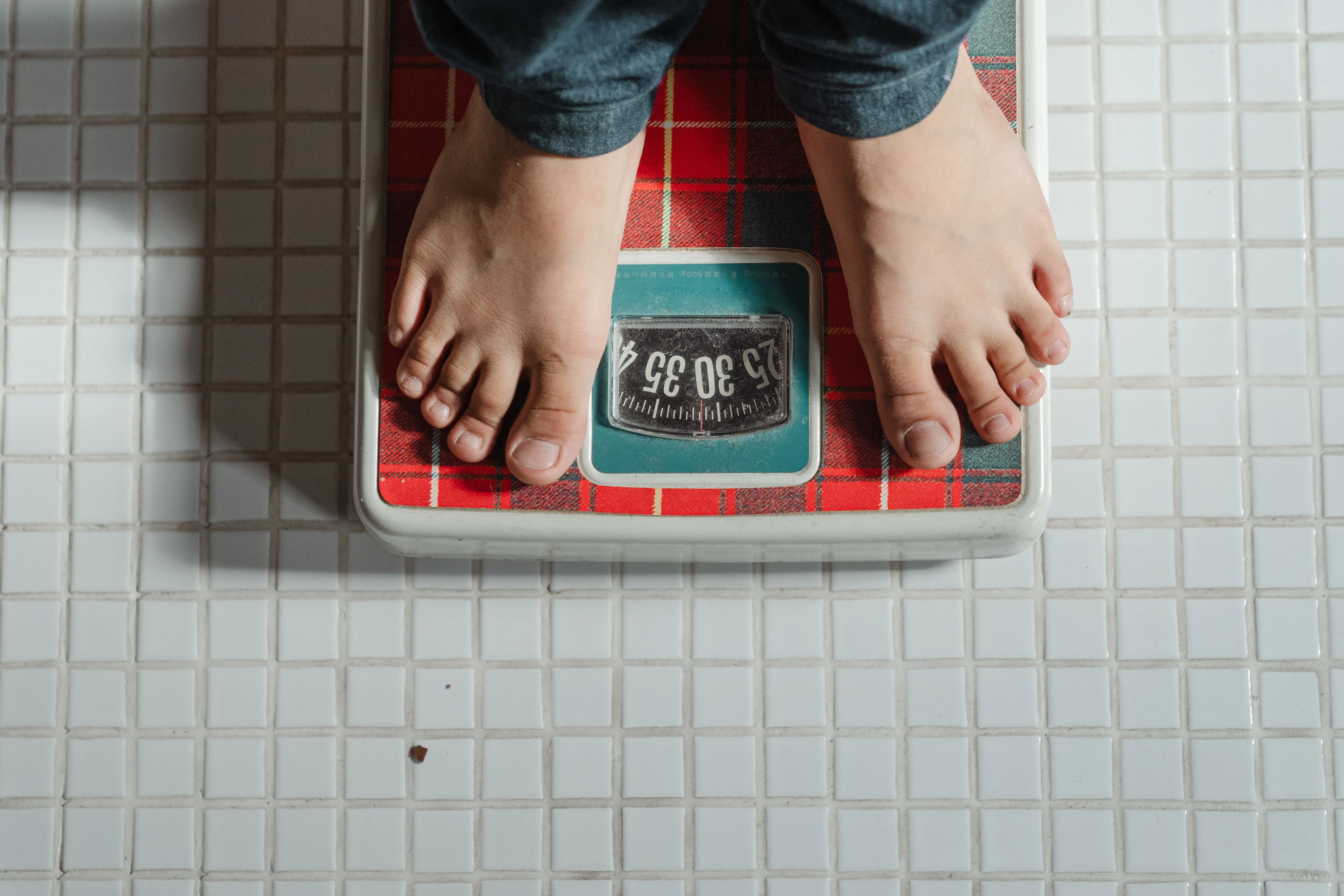
Weight loss is not linear. As you get lighter, your body needs fewer calories, and the same intake that produced a deficit at 95 kg may be close to maintenance at 85 kg. The NIDDK puts it plainly: metabolism slows during weight loss, and your body needs fewer calories at your new, lower weight.
So a stall is not proof that the plan failed. It is often a signal to recalculate. Check whether your portions have crept up, whether you are still logging the oils, sauces and drinks, and whether your activity has changed. Then adjust by a small amount rather than slashing calories.
When to get help instead of cutting more
If you have a medical condition, take regular medication, are pregnant or breastfeeding, or have a history of disordered eating, talk to a GP or dietitian before setting a deficit. Some medicines and conditions affect weight, and some make a standard calorie target unsuitable.
A calorie deficit is a tool, not a test of willpower. The aim is a pace you can maintain while still eating enough to feel well.
Read next



Sources
- NHS Better Health: Calories and weight loss
- NHS: Tips to help you lose weight
- NIDDK: Treatment for Overweight & Obesity
- NIDDK: Eating & Physical Activity to Lose or Maintain Weight
- Helms et al., Evidence-based recommendations for natural bodybuilding contest preparation (J Int Soc Sports Nutr, 2014)