
Why am I not losing weight in a calorie deficit?
4 min read · Last reviewed
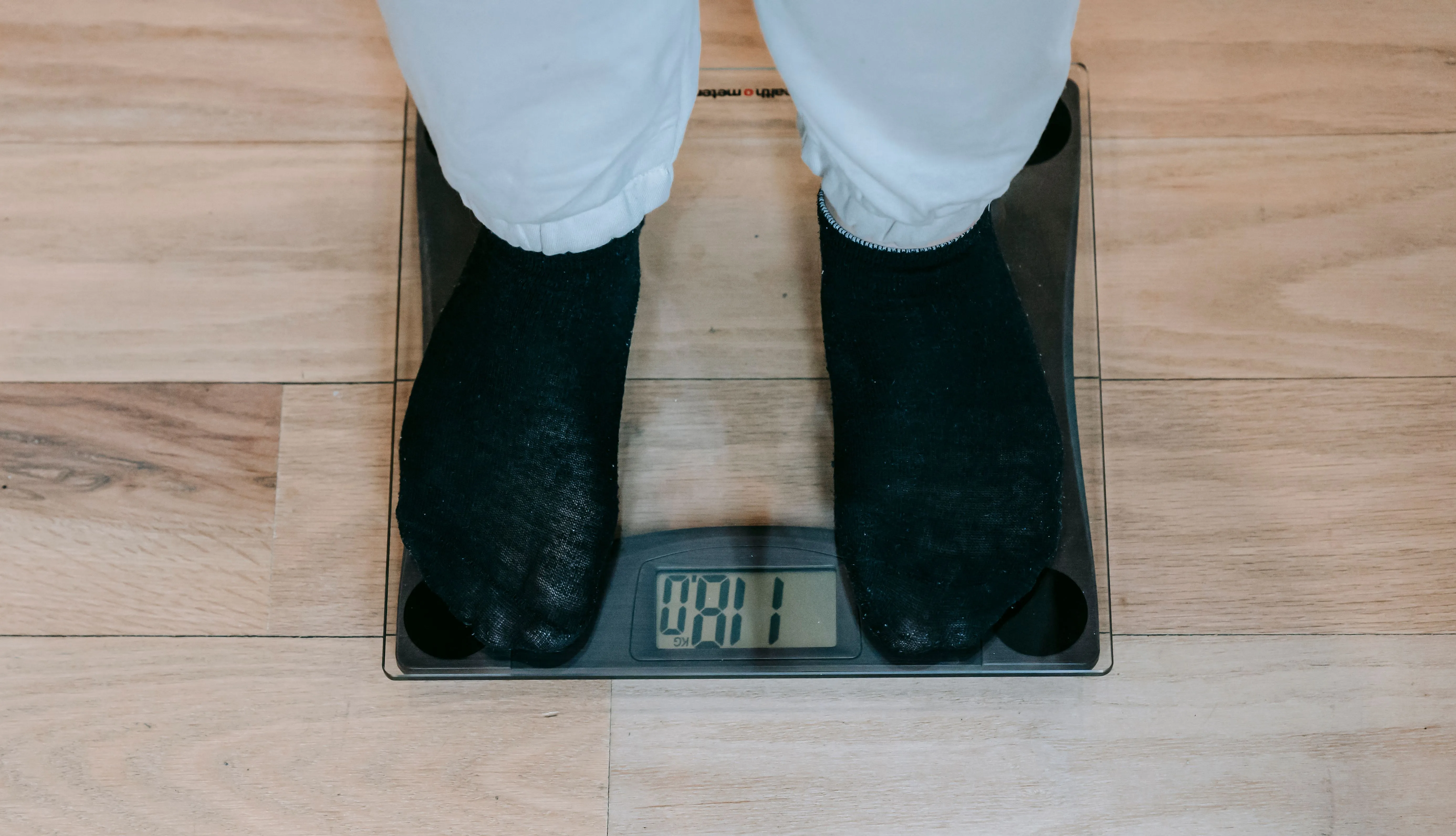
Usually the deficit is smaller than you think, your energy needs have fallen, or the scale is not measuring what you think it is. A true metabolic defect is rare. Below are the most common reasons a deficit stops producing results, and what to do about each one.
1. The intake is higher than the log

This is the most common explanation, and it is not a character flaw. The NIDDK notes that people often underestimate how much they eat. The Shonkoff review of dietary assessment points out that under-reporting of energy intake is common, especially among people with obesity.
The usual suspects are:
- oils, butter and sauces used in cooking, which photos often miss
- drinks, including juice, milk and alcohol
- the handful of nuts or the spoonful of peanut butter
- portions that have drifted upward since you started
- label portions that are smaller than what you serve yourself
The NHS calorie-counting guide recommends weighing portions when you start, precisely because the packet portion and your portion are often different.
2. Your maintenance calories have fallen
As you lose weight, your body needs less energy. The NIDDK says it plainly: metabolism slows during weight loss, and your body needs fewer calories at your new, lower weight.
There can be more to it than the weight change alone. The Helms review describes metabolic adaptation in which energy expenditure falls by more than predicted from the loss of body mass. In the studies it cites, the extra fall ranged from about 79 to 504 calories a day.
That does not mean your metabolism is broken. It means the intake that created a deficit at your starting weight may be close to maintenance now. Recalculate rather than assume the old number still works.
3. Your activity has quietly dropped
A deficit is the gap between intake and expenditure. Most people watch the intake side and assume the expenditure side is fixed. It is not.
When you eat less, you may move less without noticing: fewer spontaneous walks, more sitting, less fidgeting, shorter workouts. The Pontzer study found that the body can offset higher activity by reducing energy spent elsewhere. In the other direction, the Hall review describes how food restriction lowers activity energy expenditure as well as resting expenditure.
If your step count or training volume has fallen, your deficit has shrunk even if your food log looks the same.
4. The scale is noisy
Body weight is not a fat meter. It moves with water, glycogen and the food in your gut, and the Hall review notes that hydration and gut contents are the main contributors to the typical 1 to 2 lb of day-to-day fluctuation.
The practical fix is to judge the trend, not the day:
- weigh at the same time, under the same conditions
- look at a weekly average
- use waist measurements or photos as a second signal
- give a new plan three to four weeks before judging it
If you are within a few hundred grams of the same weight for a month, that is a real plateau. If you are up and down around a downward trend, it is probably noise.
Before changing anything, write down what you actually did for the past week: meals, walks, sleep, stress. Patterns are easier to see on paper than in memory, and the answer is often in a detail you had stopped noticing.
5. A medical or medication factor
Some health problems and medicines affect weight. The NIDDK lists conditions such as polycystic ovary syndrome, Cushing’s syndrome and hypothyroidism, as well as some medicines for epilepsy, depression, psychosis, diabetes, high blood pressure and allergies.
Sleep and long-term stress can also affect appetite and weight. If you are sleeping badly, constantly stressed, or taking a medicine that changed around the time your progress stalled, raise it with a GP rather than cutting calories further.
What to do next
Work through the list in order:
- Audit your portions for one week, including oils, sauces and drinks.
- Recalculate your maintenance calories at your current weight.
- Check your step count and training volume against a month ago.
- Compare weekly averages rather than daily weights.
- If nothing moves after three to four weeks, reduce intake slightly or increase activity slightly, not both drastically.
Do not respond to a stall by slashing calories to a very low level. NICE advises against restrictive, nutritionally unbalanced diets, and very low calorie diets belong in specialist care.
A note on mental health
If thoughts about food, weight or your body are taking over, or if you feel trapped in a cycle of restriction and guilt, talk to a GP. The NHS points readers to Beat Eating Disorders for support. A plateau is frustrating, but it is not a reason to ignore your health.
Read next



Sources
- NIDDK: Eating & Physical Activity to Lose or Maintain Weight
- NIDDK: Body Weight Planner
- NIDDK: Factors Affecting Weight & Health
- Helms et al., Evidence-based recommendations for natural bodybuilding contest preparation (J Int Soc Sports Nutr, 2014)
- Shonkoff et al., AI-based digital image dietary assessment methods compared to humans and ground truth: a systematic review (Ann Med, 2023)
- Pontzer et al., Constrained total energy expenditure and metabolic adaptation to physical activity in adult humans (Curr Biol, 2016)
- NHS Better Health: Calories and weight loss
- Hall et al., Energy balance and its components: implications for body weight regulation (Am J Clin Nutr, 2012)