
ChatGPT vs a calorie tracking app for counting calories
4 min read · Last reviewed

A calorie tracking app is the better tool for counting calories day to day. ChatGPT is better for explaining food, planning meals and answering questions. The difference is not intelligence. It is what each tool is built to do.
What ChatGPT is actually doing
ChatGPT is a language model. It generates a plausible answer from patterns in its training data. Unless you paste in a database value or it happens to look one up, it is not reading the back of your packet or checking a food-composition table.
That has two consequences. First, its answers can be reasonable but not exact. In a 2025 study, ChatGPT-4o and Claude 3.5 had an average error of about 36% for both food weight and energy when estimating from photos, and both underestimated larger portions.
Second, its answers can vary. A 2024 study asked ten chatbots the same nutrition questions on three consecutive days. ChatGPT-4.0 reproduced its own answers only 50% of the time, and ChatGPT-3.5 52.8%. The content was often plausible, but it was not stable enough to serve as a fixed daily target.
What a calorie app does differently
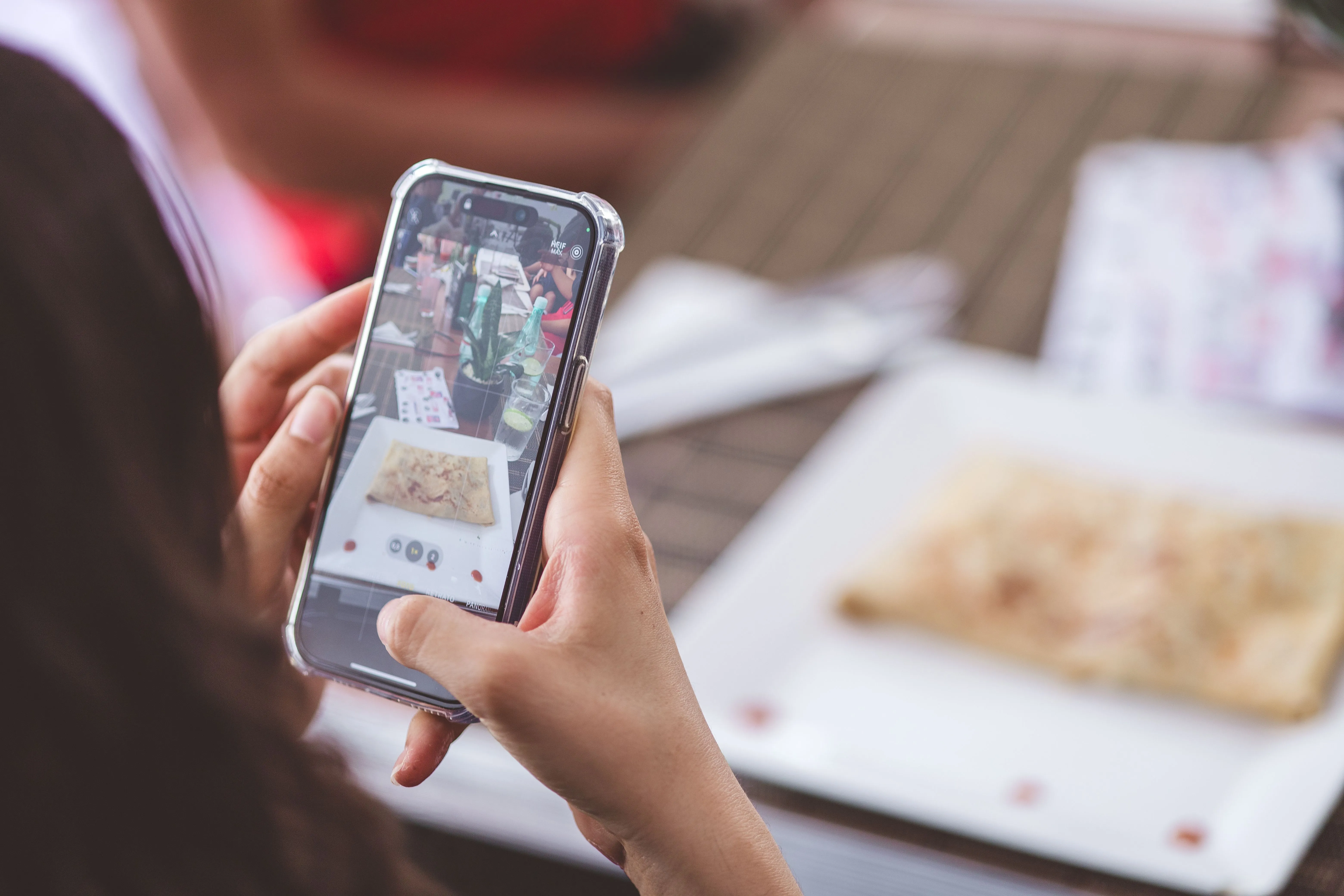
A tracking app is built around a structured food record. It stores what you ate, looks up a value from a reference database, multiplies by the portion, and adds up the day.
The databases behind it matter. USDA FoodData Central provides analytical and label data for US foods. ANSES-CIQUAL is the French reference table, managed by ANSES, with thousands of foods eaten in France. Open Food Facts fills the gap for packaged products through barcode lookups.
None of these is perfect. Open Food Facts says plainly that its data is provided voluntarily and that there are no assurances it is accurate, complete or reliable. A 2024 study of commercial apps found that their energy estimates also varied, overestimating some diets and underestimating others.
But there is a practical difference: a database entry can be checked. You can see the food, the portion and the source. A chatbot sentence cannot be audited in the same way.
The data problem is bigger than it looks. A dish like chicken curry has thousands of recipes. A database entry picks one and states its assumptions. A chatbot averages the patterns it has seen and presents the result with the same confidence. Neither is “the truth”, but the database answer is at least reproducible.
That is also why two apps can disagree about the same supermarket product: one may use the label, another a generic recipe. If you have the pack, the label is usually the better source for that packet.
Where ChatGPT genuinely helps
ChatGPT is useful for the parts a database does not do:
- explaining what a nutrition label means
- suggesting meals that fit a protein target
- translating a recipe into grams
- brainstorming swaps for a food you are bored of
- helping you plan a shopping list
It can also give you a rough sanity check. If you are wondering whether a restaurant meal is closer to 600 or 1,200 calories, a chatbot can help you think it through. Just do not treat the number as a measurement.
For medical nutrition advice, especially with diabetes, kidney disease or a history of disordered eating, neither a chatbot nor an app replaces a dietitian.
The consistency problem
Counting calories depends on adding up many small estimates. A tool that gives a slightly different answer each time makes that harder, not easier.
A chatbot also does not remember your day unless you paste the whole day back in. It cannot automatically subtract breakfast from your target, warn you that you have already logged three coffees, or show a weekly trend. An app does those things by design.
A practical way to use both
Use the app for the record and the chatbot for the questions.
- Log food in the app, using barcodes for packaged items and weighed portions for dense foods.
- Check the entry against the label or a trusted database when the number looks surprising.
- Ask ChatGPT for explanations, meal ideas or a second opinion, not for the final total.
- Keep one source of truth for the day’s calories.
Trimlo is built for the first job: it searches USDA and CIQUAL foods, scans barcodes through Open Food Facts, and lets you log a meal from a photo or by voice with the grams shown for you to check. The diary stays on your phone. For the second job, a chatbot is fine.
Read next

Sources
- Fridolfsson et al., Performance evaluation of 3 large language models for nutritional content estimation from food images (Curr Dev Nutr, 2025)
- Ponzo et al., Comparison of the accuracy, completeness, reproducibility and consistency of different AI chatbots in providing nutritional advice (J Clin Med, 2024)
- Shonkoff et al., AI-based digital image dietary assessment methods compared to humans and ground truth: a systematic review (Ann Med, 2023)
- Li et al., Evaluating the quality and comparative validity of manual food logging and AI-enabled food image recognition in apps (Nutrients, 2024)
- USDA FoodData Central
- ANSES-CIQUAL food composition table (data.gouv.fr)
- Open Food Facts API documentation
- NHS Better Health: Calories and weight loss